
Dependency scanning (SCA) on every pull request
Codacy finds vulnerable and malicious open source packages, shows which direct dependency to upgrade, and re-checks your repositories daily for newly published CVEs. Scan your dependencies in minutes without pipeline steps.
Trusted by 15,000+ organizations and 200,000+ developers worldwide

Why engineering teams choose Codacy for dependency scanning
Vulnerable dependencies caught on every PR
Connect GitHub, GitLab or Bitbucket and Codacy checks the manifest and lock files in every pull request on its own infrastructure. New vulnerable or malicious packages show up on the PR as issues, and merge gates stop them from going to production. No CI/CD configuration needed.
Learn more about dependency scanning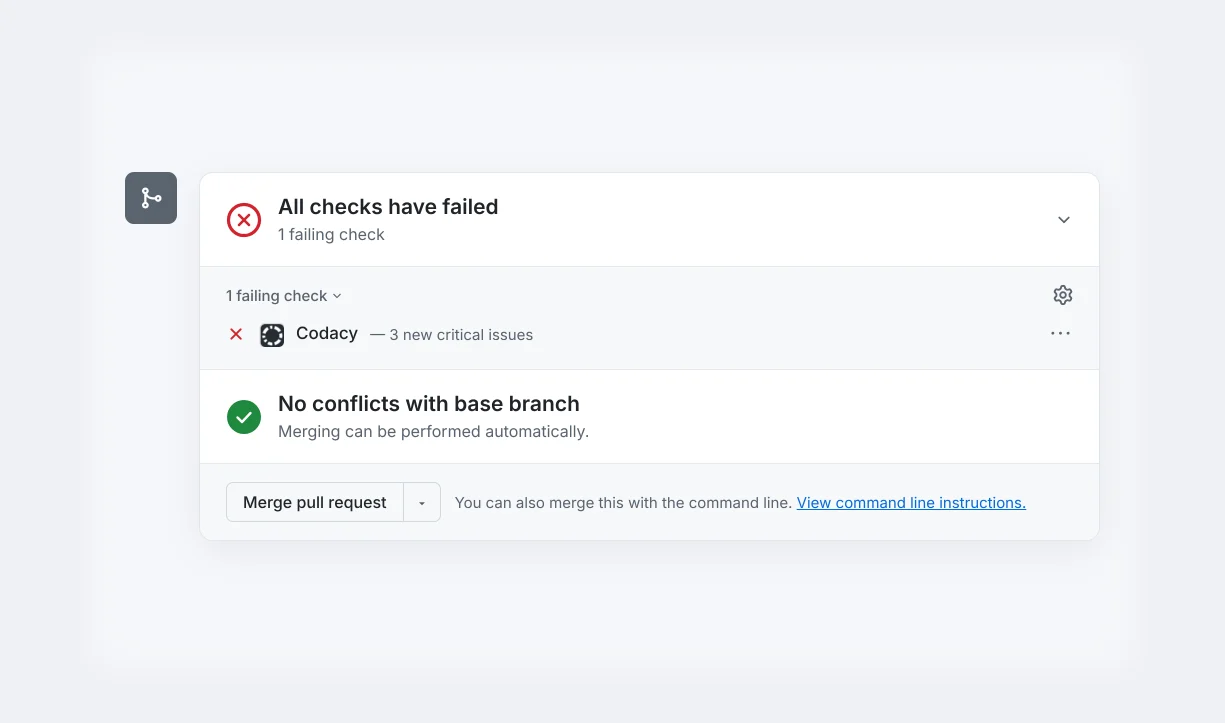
New CVEs found without a new commit
Codacy re-scans the dependencies of every repository each day for new vulnerabilities and malicious packages. A service nobody has touched in months still gets a finding when a new advisory hits one of its libraries.
Learn more about daily re-scans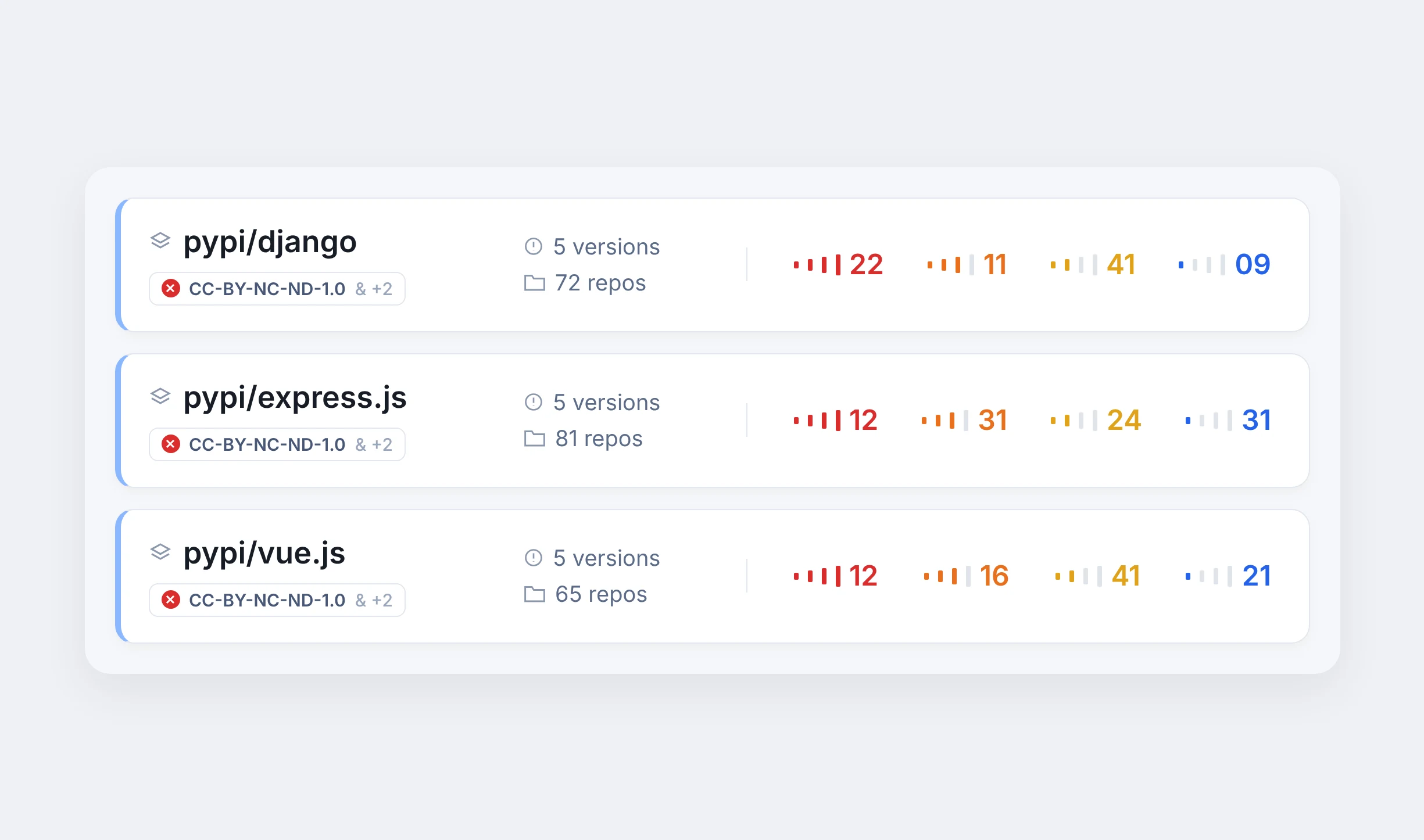
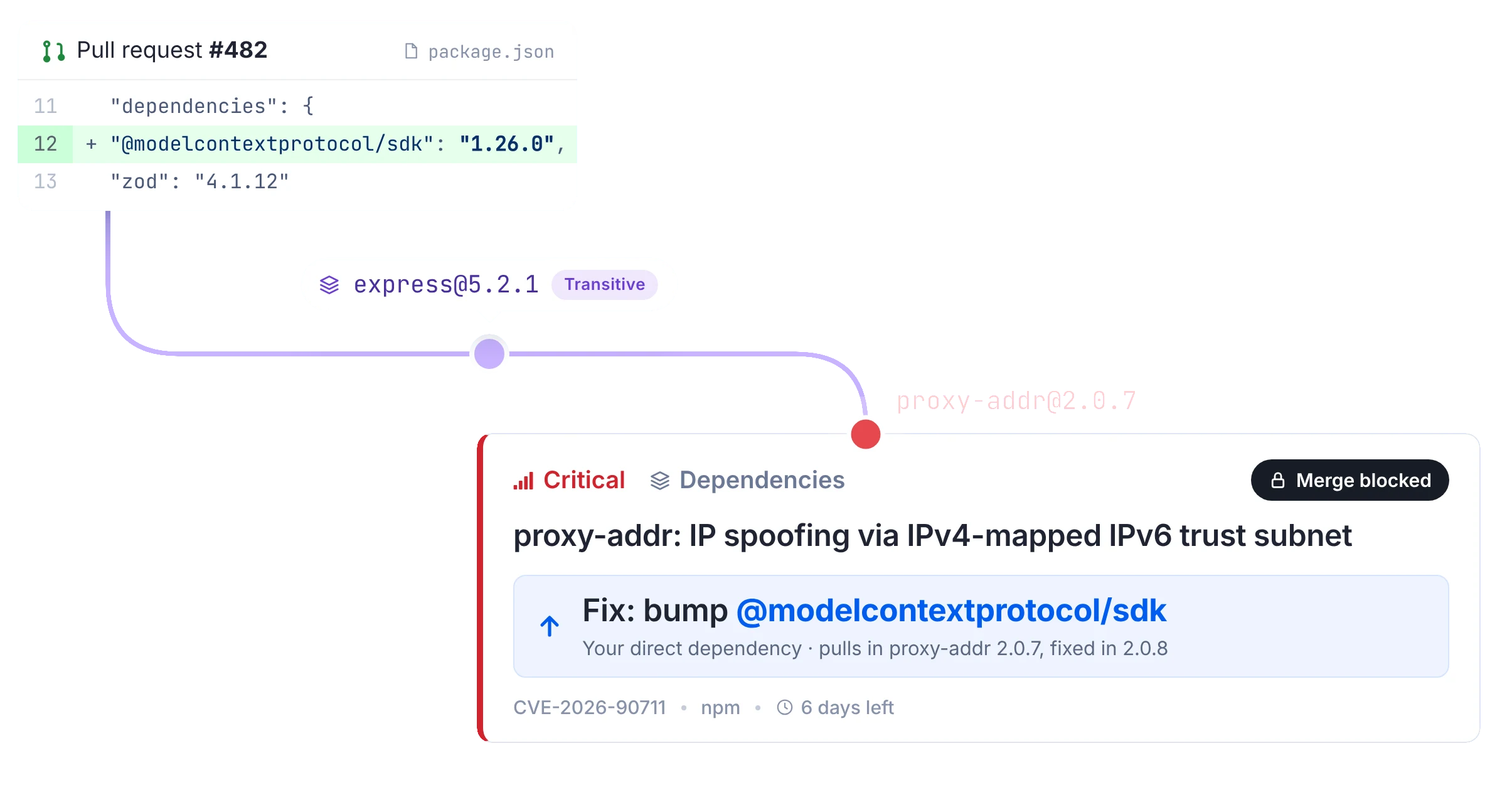
Know which dependency to bump, and whether the vulnerable code is reachable
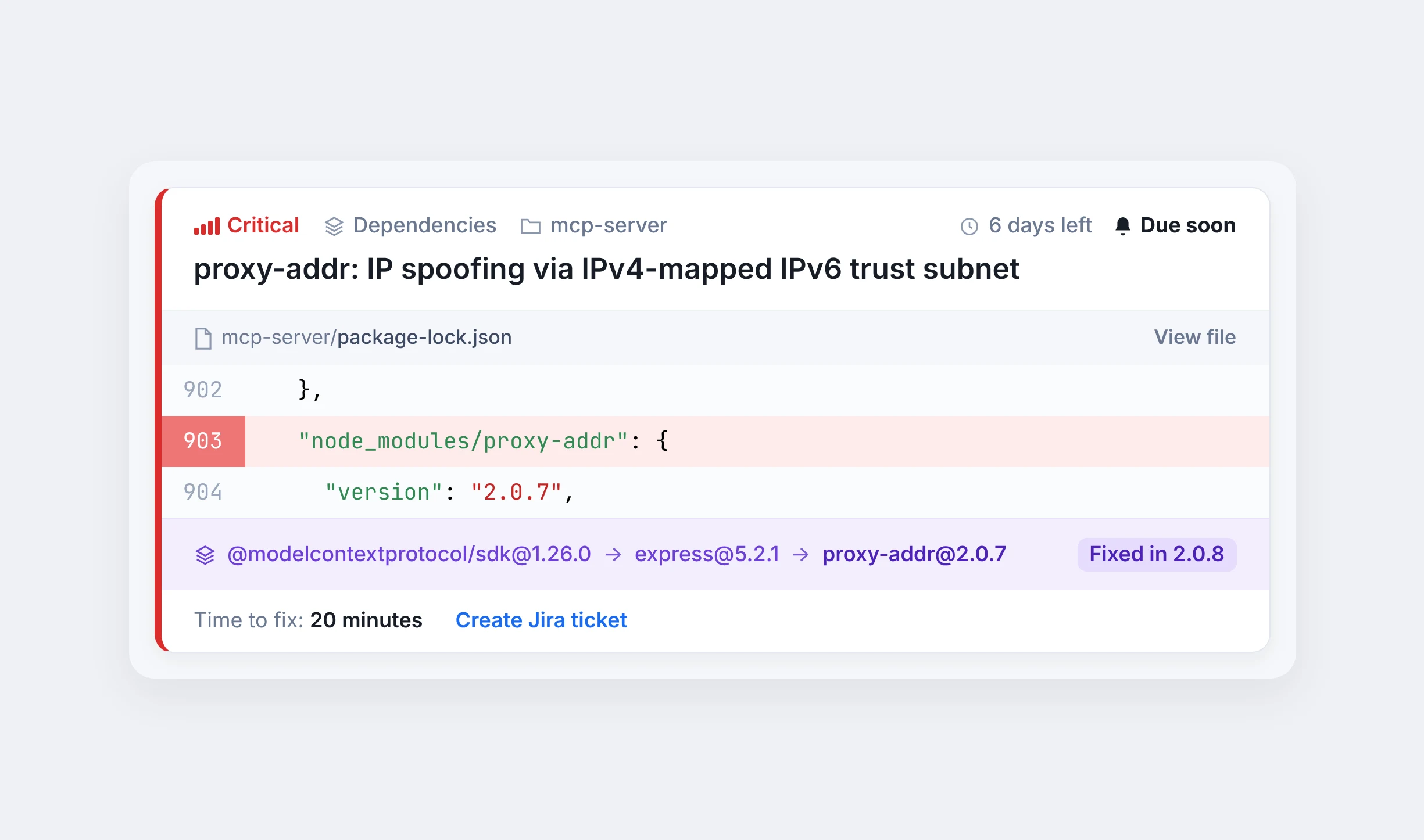
For a transitive vulnerability, Codacy shows the chain from the direct dependency in your manifest down to the vulnerable package, so you know which one to upgrade. When the advisory names affected functions, Codacy lists them and gives you a prompt for your AI assistant to check whether your code calls them. You decide whether to upgrade or mark the finding not exploitable.
Learn more about dependency chains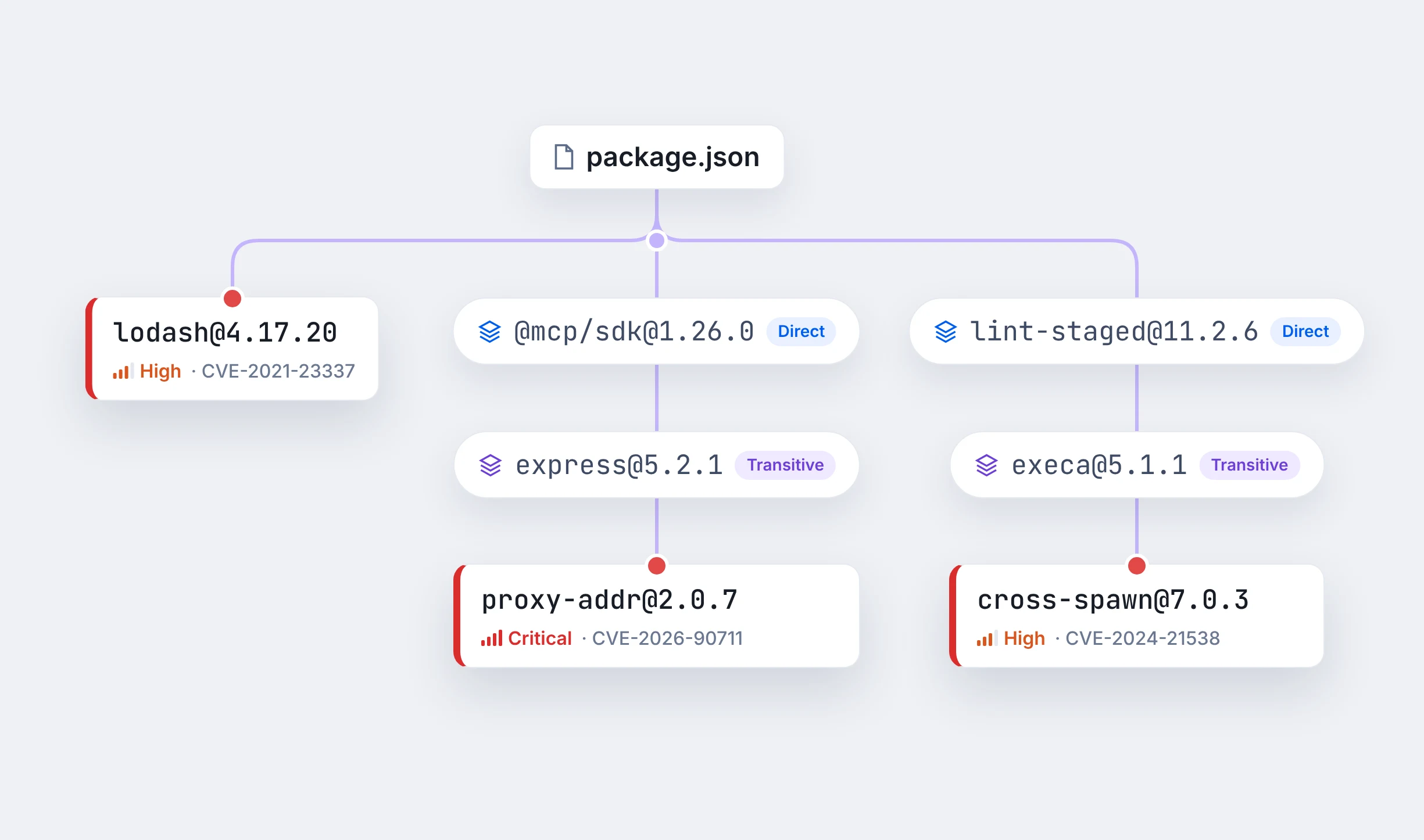
A deadline on every vulnerable dependency
Every dependency finding gets a remediation SLA, with customizable due dates across four severity levels. Track what's overdue, get Slack alerts for new critical issues, and export the list when auditors ask.
Learn more about remediation SLAs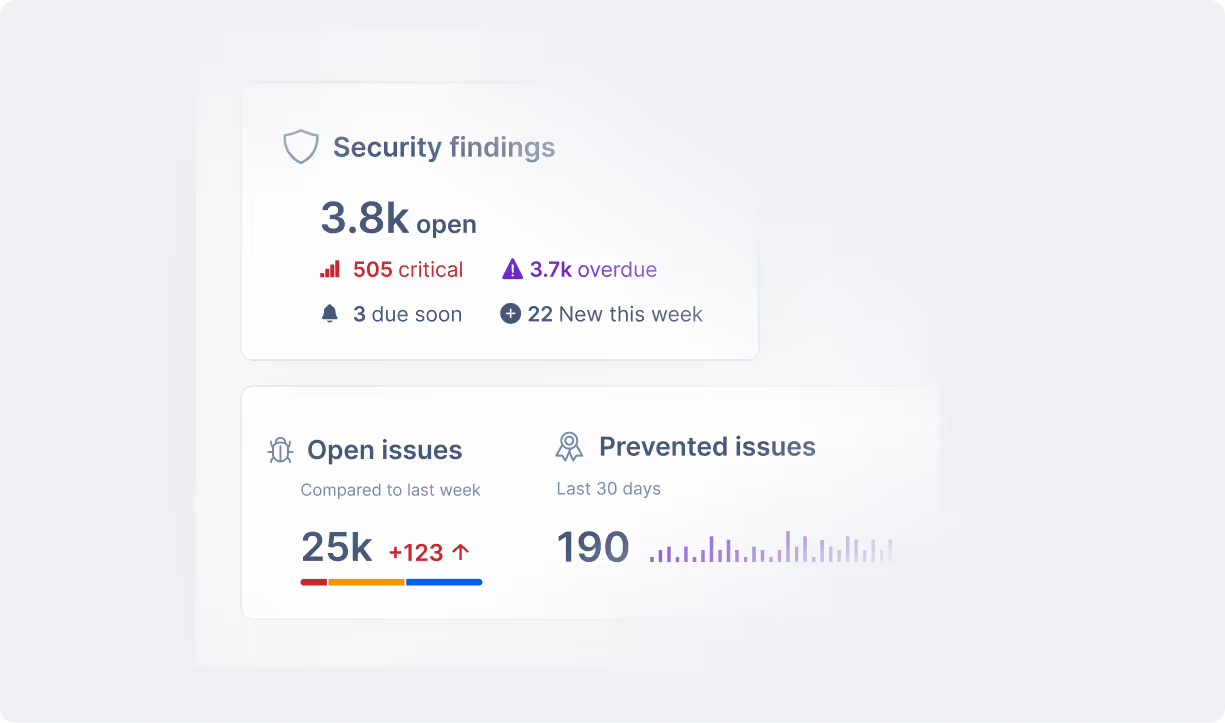
Dependency scanning, container scanning, SAST and code quality in one subscription
Codacy unifies dependency scanning (SCA), SAST, infrastructure-as-code, container scanning, code quality and code coverage in one platform. Stop juggling invoices and dashboards for separate security scanners and code review tools. Billed per developer, with unlimited lines of code.
See all features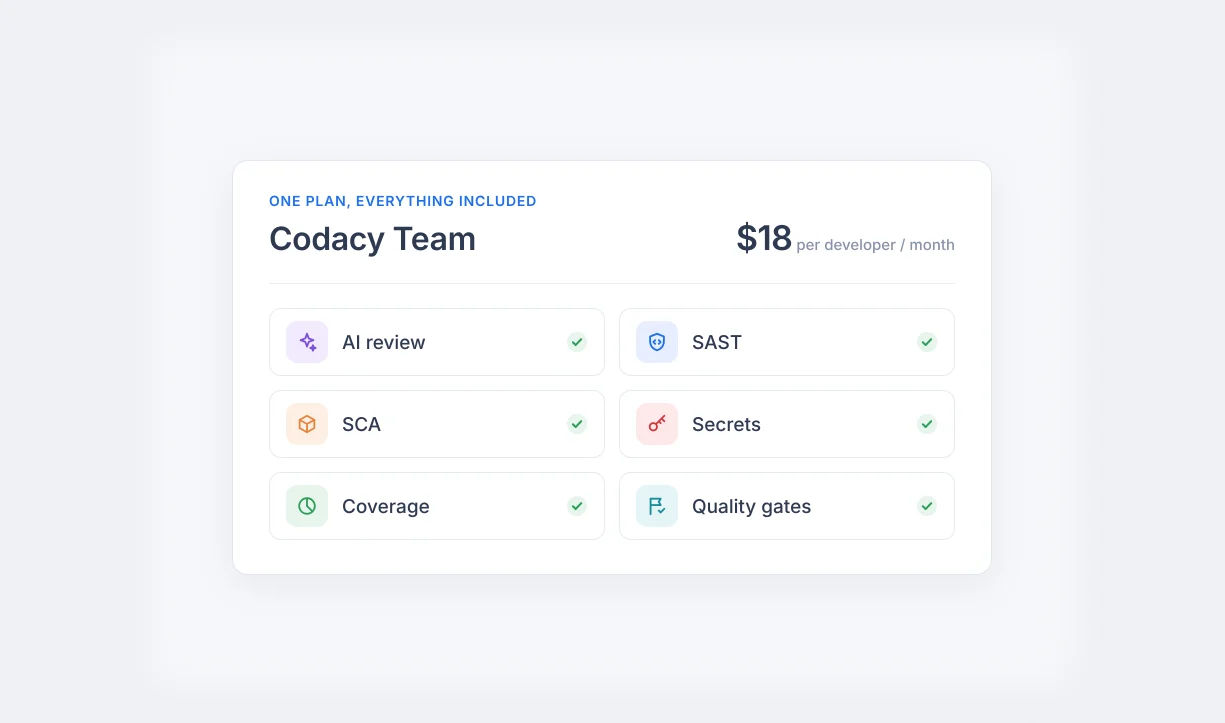
What Codacy SCA catches
Codacy checks 20 manifest and lock file formats across 16 languages. Turn its patterns on per repository, or for the whole organization with a coding standard.
Known CVEs in direct and transitive dependencies
Each finding links to its CVE or GHSA advisory, carries a severity and shows the chain that pulled the package in, so the fix starts from a package you control.
Known malicious packages flagged
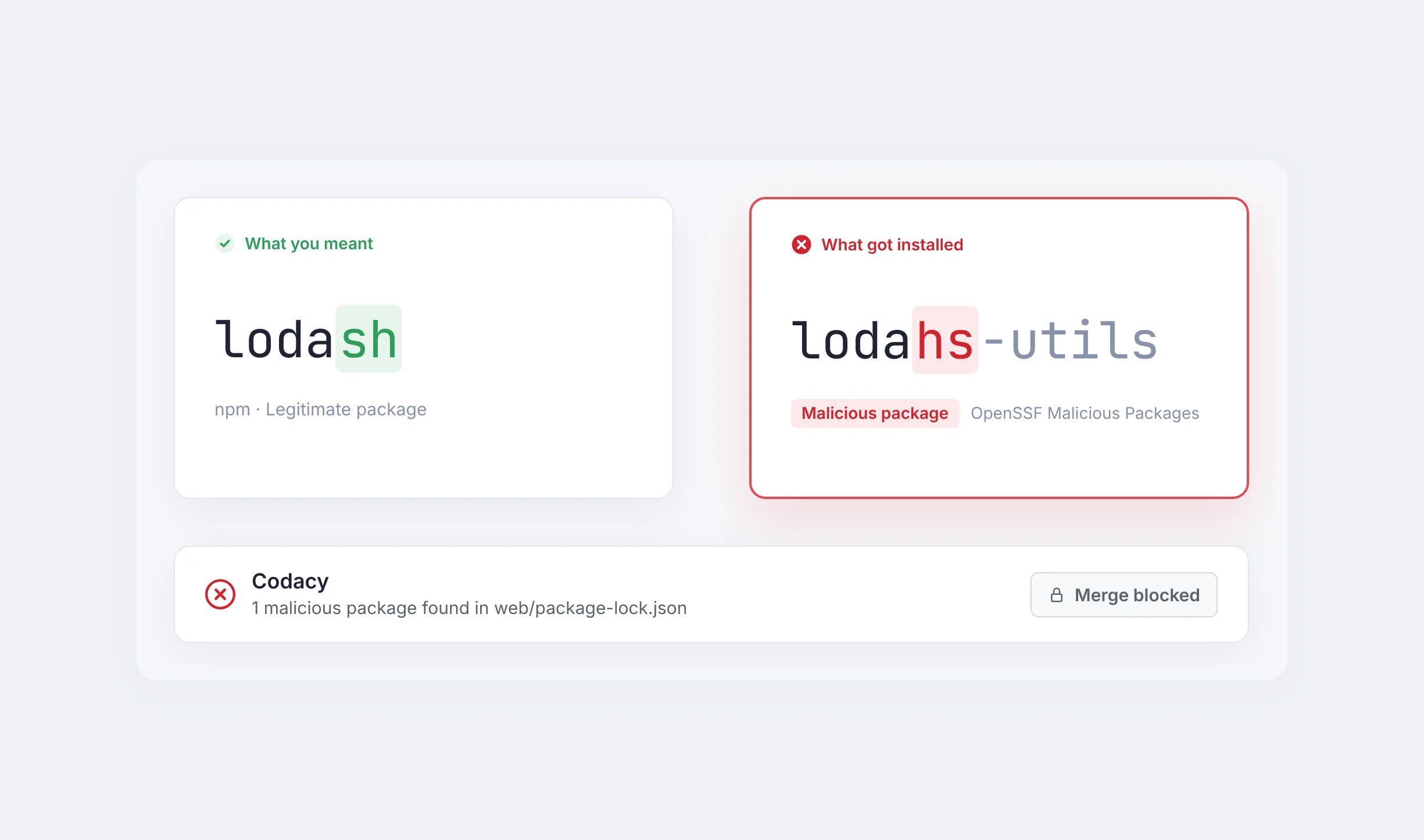
Codacy checks npm, PyPI, Maven, NuGet, RubyGems, crates.io and Go dependencies against the OpenSSF Malicious Packages database, which is updated daily.
The license on every dependency version
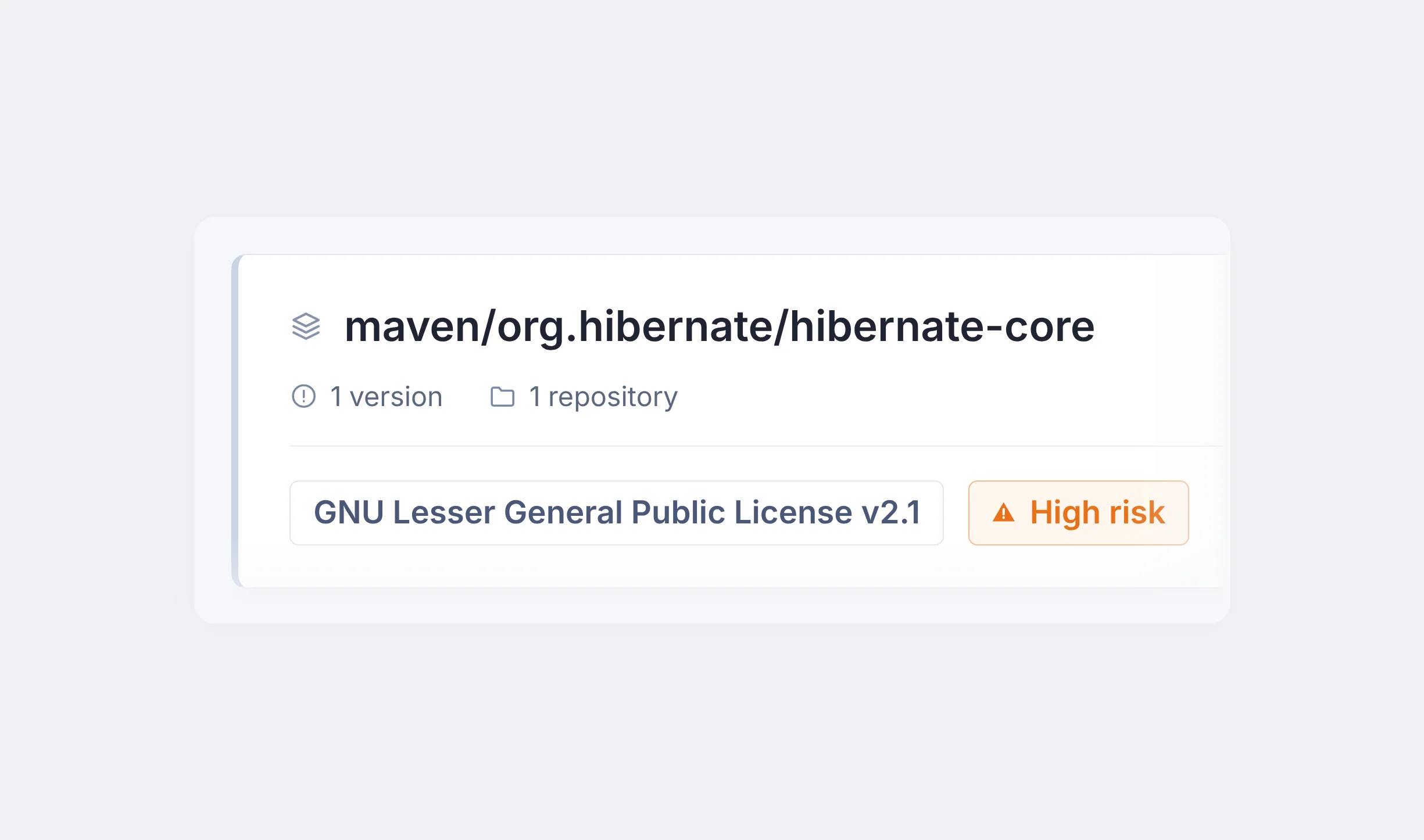
See which license each version of each dependency ships under, so a copyleft package doesn't surprise anyone at audit time.
16 languages, 20 manifest and lock files
npm, Yarn, pip, Pipenv, Poetry, uv, Maven, Gradle, NuGet, Go modules, Bundler, Composer, Cargo, SwiftPM, Conan, Mix, pub and sbt.
SBOMCycloneDX SBOM export
Export a CycloneDX SBOM for any repository from the Dependencies view, ready for customer security reviews and audits.
Dependencies viewEvery dependency in your organization, with its OSSF Scorecard
See which repositories use each package, which versions are in use, the license on each version and the upstream project's OSSF Scorecard. Sort by highest vulnerability or lowest score.
"We blocked the ability to introduce new security issues for the past two years."
Ronen Yurik, DevEx Director at LSports
new critical security issues introduced in two years
core repositories under unified security gates
developers onboarded

Who Codacy SCA is built for

Teams that answer to auditors and customer security reviews
For teams that have to show which open source they ship and that known vulnerabilities get fixed on time. CycloneDX SBOMs, severity-based deadlines and an exportable findings list give you evidence for SOC 2, ISO 27001 or PCI DSS reviews.

Teams with more repositories than people watching them
For organizations where most services aren't touched every week. Daily re-scans and one org-wide Dependencies view show which packages carry the most risk and where they're used.

Teams building with coding agents
For teams where Claude Code, Codex or Cursor add packages on their own, sometimes at versions from outdated training data. Codacy Agent Skills and IDE plugins check dependencies against your rules before commit, and the pull request gate catches what slips past.
Dependency checks from
the first prompt to production
The same dependency rules run at every step, and container scanning covers the packages inside your images.
AI Agent
Check the packages your agent adds


Editor
Flag vulnerable dependencies before commit


Git Repo
Hold back merges that add vulnerable packages


Containers
Re-check the image SBOMs you deploy every day


Run your first dependency scan in minutes
Full scan within minutes | Free trial for 14 days | No credit card required
Frequently asked questions
What does Codacy SCA detect?
Codacy checks your manifest and lock files for open source packages with known vulnerabilities, in direct and transitive dependencies, and for packages listed in the OpenSSF Malicious Packages database. Each finding links to its advisory and, for transitive packages, shows the chain from your direct dependency.
Which package managers and lock files does Codacy support?
Vulnerability scanning covers C and C++ (conan.lock), C# (.deps.json, packages.lock.json), Dart (pubspec.lock), Elixir (mix.lock), Go (go.mod), Java and Kotlin (pom.xml, gradle.lockfile), JavaScript and TypeScript (package.json, package-lock.json, yarn.lock), PHP (composer.lock), Python (requirements.txt, Pipfile.lock, poetry.lock, uv.lock), Ruby (Gemfile.lock), Rust (Cargo.lock), Scala (build.sbt.lock, with the sbt-dependency-lock plugin) and Swift (Package.resolved).
See the full list, including malicious package coverage, in supported languages and tools.
Do I need to change my CI/CD pipeline?
No. Codacy is triggered by Git webhooks, runs Trivy on its own infrastructure and reports back to the pull request as a status check. Merge gates block a PR once you make the Codacy check required in your branch protection settings.
How does Codacy find new CVEs in code nobody has changed?
On the Business plan, Codacy re-scans the dependencies of every repository daily, so a newly published CVE or malicious package report creates a finding without a new commit. Trivy and at least one Trivy vulnerability pattern need to be on. On other plans, dependency findings update when Codacy analyzes a new commit to the default branch.
Does Codacy do reachability analysis?
Codacy shows the evidence and leaves the call to you. When an advisory names affected functions, Codacy lists them on the finding and copies a prompt for your AI coding assistant to search your repository for calls to them and recommend an upgrade or marking the finding not exploitable. It's a signal, not a guarantee, and not every advisory names functions.
Can I export an SBOM and see dependency licenses?
Yes, on the Business plan. The Dependencies view exports a CycloneDX SBOM in JSON for any repository with dependency findings, and shows the license on every version of every dependency alongside its OSSF Scorecard.
Which plan includes SCA, and what does it cost?
The free Developer plan includes local dependency scans in your IDE. The Team plan adds dependency scanning on every commit and pull request, malicious package detection, merge gates, code quality and coverage, from $18 per developer per month billed yearly ($21 monthly), for up to 30 developers, and is free for open source. The Business plan adds daily re-scans across all repositories, the Dependencies view with OSSF Scorecard and SBOM export, license scanning, container image scanning and SSO. You can start a 14-day free trial with no credit card, or ask for a one-month guided Proof of Value for larger rollouts.
Dependency scanning on every pull request, and a daily check for new CVEs.
See it on your code in minutes.
Full scan within minutes | Free trial for 14 days | No credit card required