CodacyWhat shipped, January 2025 to August 2026

Shipped Since You Left

If you last looked at Codacy in 2024 or 2025, three things changed: a Codacy that runs inside your coding agents and from the terminal, an AI review and governance layer that did not exist, and security scanning that keeps working after the commit lands. Everything below is live today.

01

Codacy inside Claude, Codex and your terminal

The work moved into the agent loop, so Codacy did too. Scanning runs on your machine before a pull request exists, and the CLIs let an agent configure Codacy and drive it by prompt.

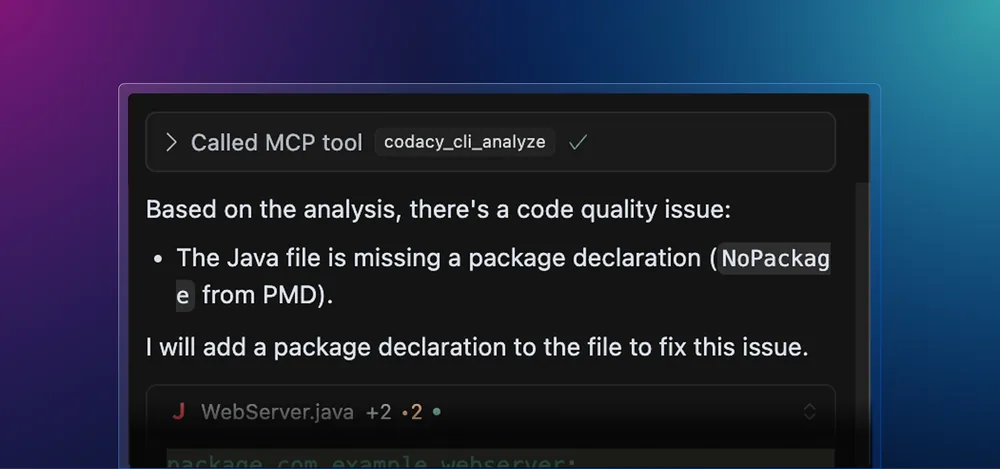
A coding agent's own transcript: it calls the codacy_cli_analyze MCP tool, reports that a Java file is missing a package declaration flagged by PMD, and says it will add one to fix it.
2025

AI Guardrails in the IDE

Scanning moved earlier than the pull request. Your agent writes code, the Codacy CLI analyses it on your machine over MCP, and your agent fixes it before a PR exists. Free in VS Code, Cursor and JetBrains, and it works offline.
The Codacy and Claude marks linked together, representing Codacy Skills driving the Codacy CLIs from a coding agent.
2026

Codacy Skills

Configuration by prompt. Skills drive the Codacy CLIs from Claude, Codex or Copilot, so an agent unblocks a failing pull request, tunes your scan rules to cut PR noise, or sets up test coverage reporting. The catalog is public and free.

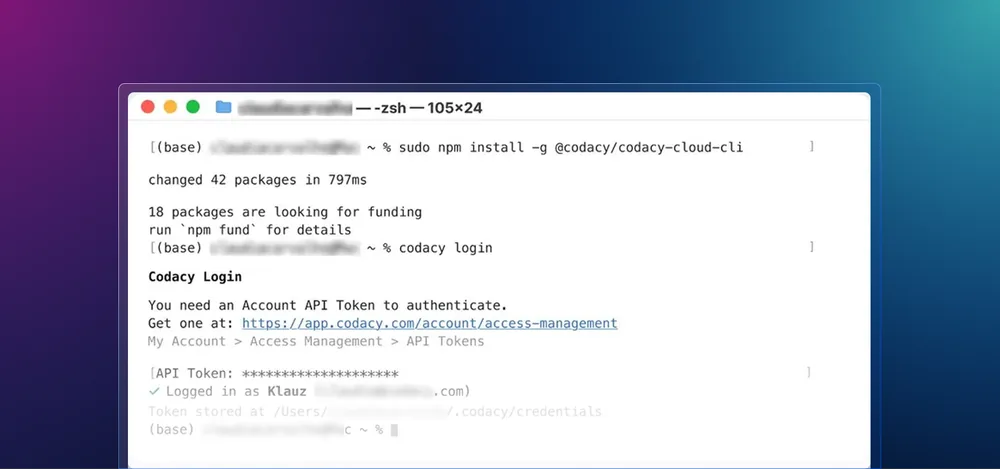
A terminal installing the Codacy Cloud CLI with npm, then running codacy login and authenticating with an account API token.
2026

Codacy from the terminal

A Cloud CLI that drives your Codacy account over the API: pull findings and metrics, adjust settings, and script the parts you would rather not click through the UI.

02

AI review, and knowing what AI is already in your code

Two separate problems. Reviewing code an agent wrote, and answering an auditor who asks which models your product calls. Codacy covers both now.

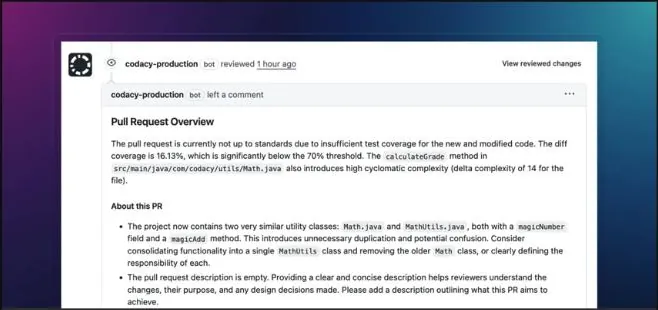
Codacy's AI Reviewer leaving a Pull Request Overview comment on a GitHub PR, flagging insufficient diff coverage and two near-duplicate utility classes.
2025

AI Reviewer

Reviews pull requests on GitHub using the PR, the linked Jira ticket and your existing Codacy findings, so it catches the logic and intent gaps scanners miss and flags weak tests. Runs on Gemini, with secrets masked before anything reaches the model.

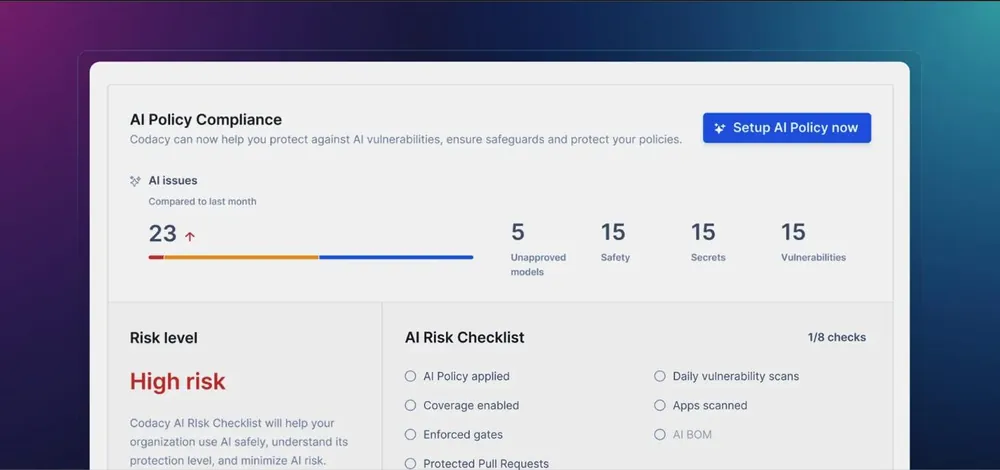
The AI Risk Hub overview: AI Policy Compliance counts, a High risk level, and an eight-item AI Risk Checklist.
2025

AI Risk Hub

An org-level view of AI risk read from your code rather than from a survey. Compliance is scored across unapproved model calls, AI safety, hardcoded secrets and insecure dependencies, with a risk level based on the safeguards you actually switched on.

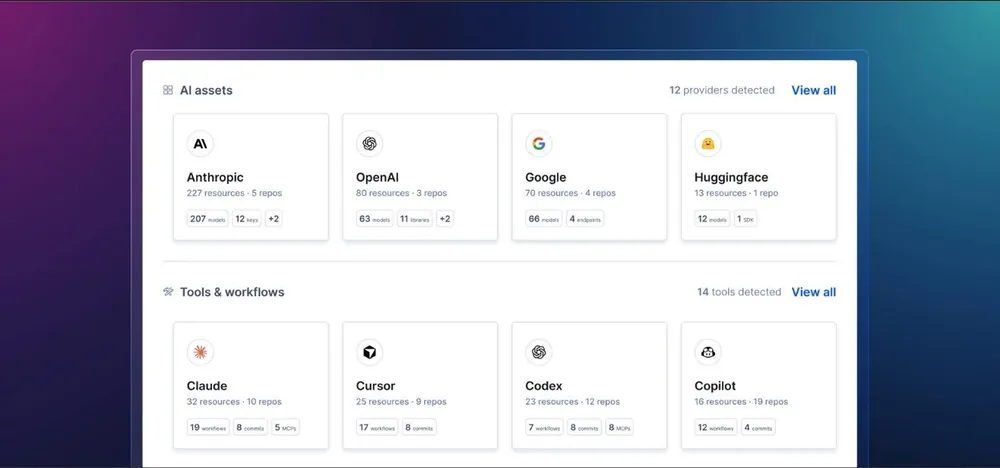
AI assets grouped by provider with resource and repository counts, above a Tools and workflows panel listing detected coding agents.
2026

AI Inventory

Every model call, dependency, API key and endpoint in your source, across 13 providers, plus which AI assistants and MCP servers your developers are running. Drillable to the line, and the evidence ISO 42001, the EU AI Act and DORA keep asking for.

03

Security that keeps looking after the commit lands

A CVE disclosed on Thursday does not wait for your next push. Most of what follows exists because scanning only on commit leaves a window open.

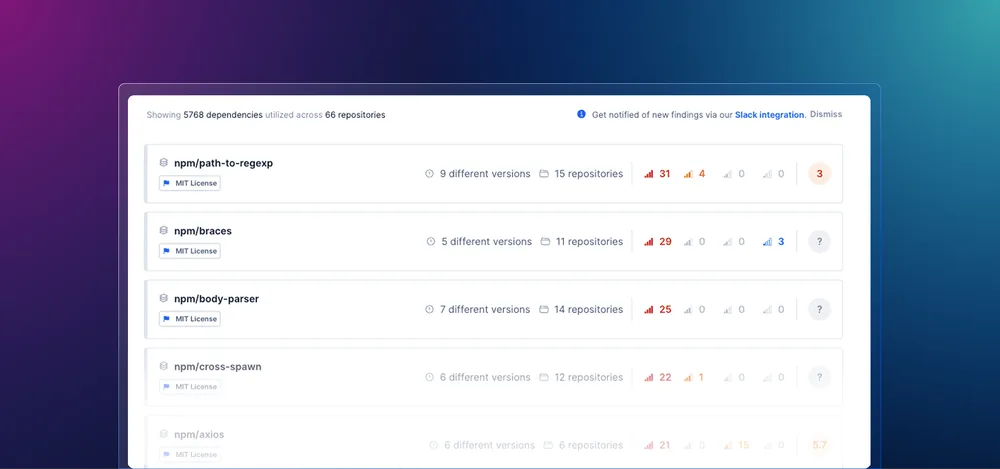
A dependency list showing 5,768 dependencies across 66 repositories, each with the versions in use and open findings counted by severity.
2025

Daily CVE re-scans

A nightly scan of your dependencies against newly disclosed vulnerabilities, so a finding opens the day the CVE is published rather than the next time somebody happens to commit.

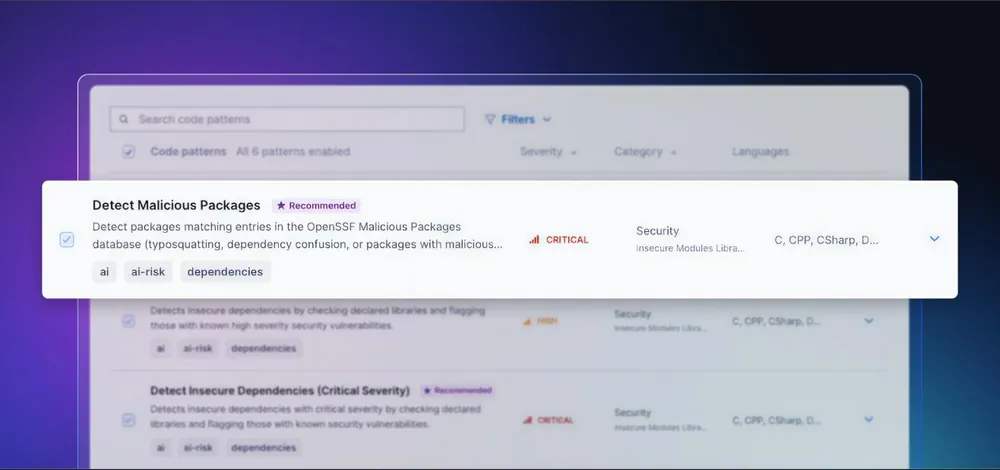
The Detect Malicious Packages code pattern, marked Critical, matching entries in the OpenSSF Malicious Packages database.
2025

Malicious package detection

Dependencies are checked against the OSSF Malicious Packages database, updated daily. Separate from CVE matching, and aimed at the install-time attacks that a vulnerability feed never sees.

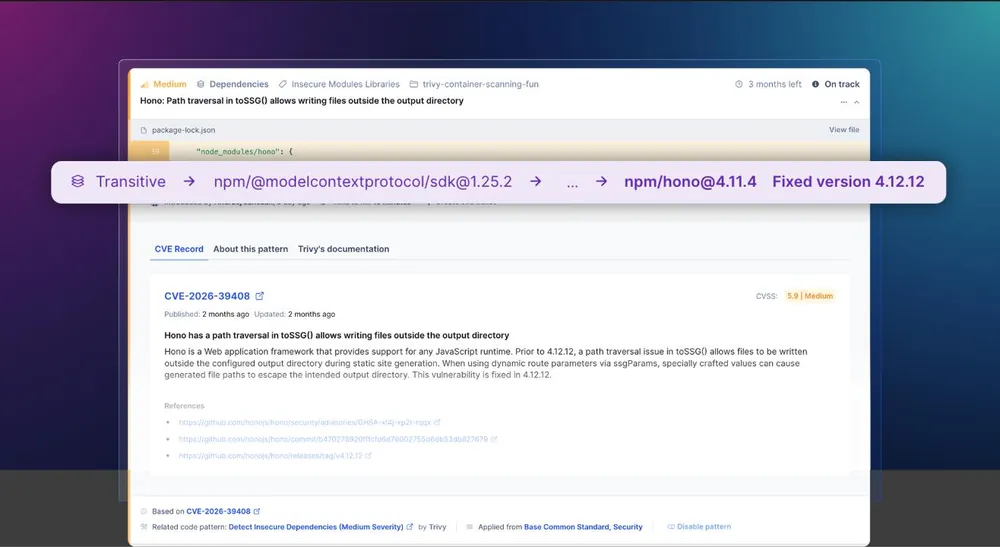
A transitive vulnerability finding showing the chain from an MCP SDK dependency down to a vulnerable hono version, with the fixed version named.
2026

Dependency chain tracing

When the vulnerable package is three levels down, Codacy shows the path from your direct dependency to the broken one, so you know what to bump. Where the advisory names them it lists the affected functions too, though plenty of advisories name none.

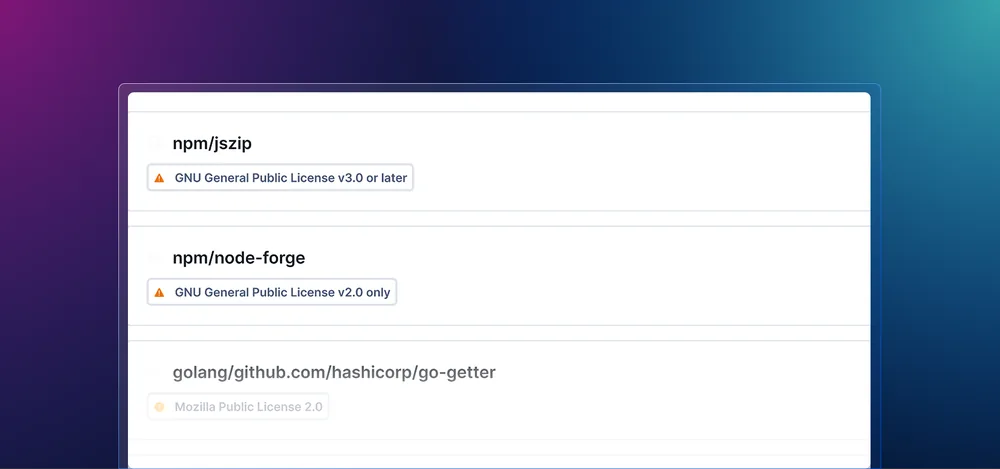
Dependencies flagged by licence: GNU General Public License v3.0 or later and v2.0 only both carry warnings, with Mozilla Public License 2.0 noted below them.
2025

Licence scanning

The same dependency scan reads the licence on every version in use and flags the risky ones, copyleft licences such as GPL included, next to the security findings and the OSSF Scorecard rating for the upstream project.

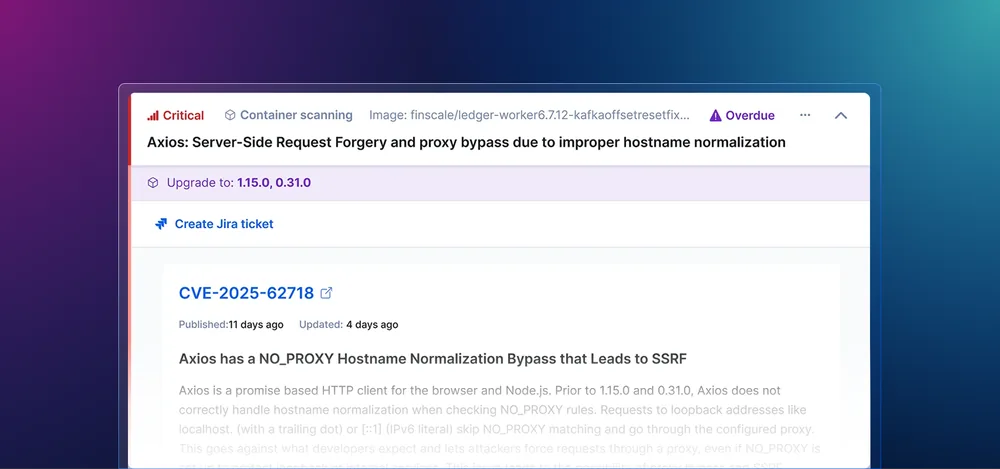
A critical container scanning finding, marked overdue, on a tagged ledger-worker image: an Axios server-side request forgery CVE with the versions to upgrade to and a Create Jira ticket action.
2026

Container image scanning

Upload a container image SBOM in CycloneDX or SPDX and findings tie to specific image tags. Every stored SBOM is re-scanned every 24 hours against new CVEs, so a base image that turns vulnerable next month still surfaces.

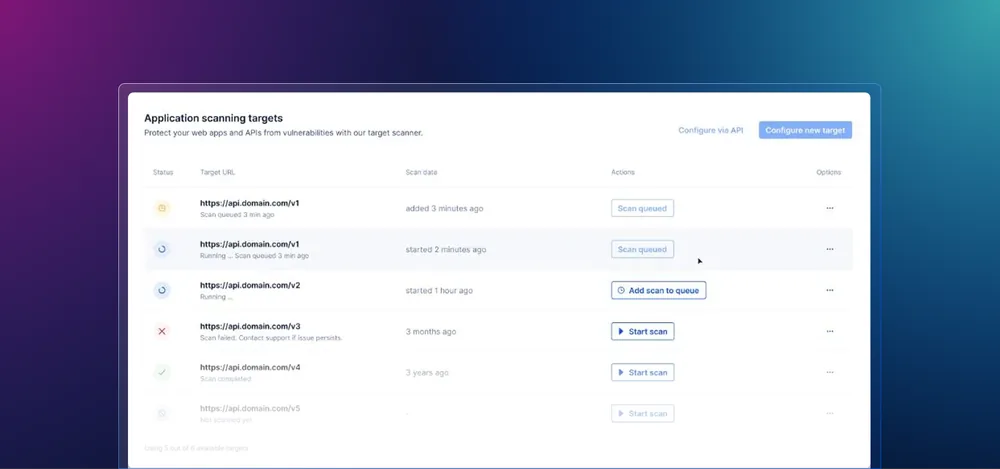
The application scanning targets table, listing target URLs with per-target status, scan dates and Start scan or Add scan to queue controls.
2026

App scanning (DAST)

Dynamic testing against a running application, either from your own pipeline with the reports uploaded, or configured as targets and started from the Codacy UI. Available as early access rather than general availability.

04

An independent gate for the agents writing your code

A separate product, in public beta and free to install today. It runs beside your agent rather than inside Codacy.

Also from Codacy · Public beta

Verity

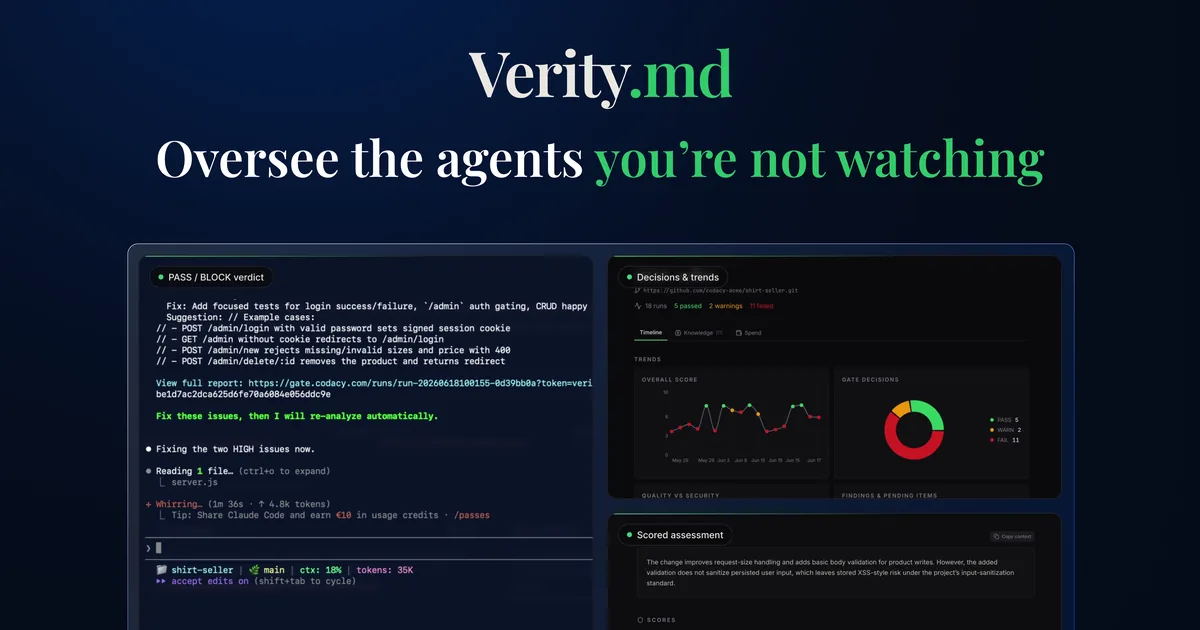
The Verity.md hero: Oversee the agents you are not watching, over a Verity report showing a pass or block verdict in the terminal with fixes to apply, a decisions and trends dashboard scoring 18 runs, and a scored assessment naming a stored cross-site scripting risk.

An independent gate for coding agents. When your agent stops, a model that did not write the code judges the change against your standard on quality, security and intent, then passes it or blocks it with file-and-line findings so the agent can fix its own work before the commit lands.

The gate
A pass or block verdict before commit, with Codacy's deterministic analysis behind the judgement rather than a second opinion on its own.
Memory
Decisions, gotchas and integrations recorded as Markdown committed to your repo, so the next session starts where the last one finished.
Cost
Token spend metered where the agent runs: per model, per session, per run, and as a cost tree across every agent you have going.
npm install -g @codacy/verity-cli && verity init

Free during public beta, no credit card. Working with Claude Code today, macOS only for now. Your code is never stored. verity.md

05

See what the platform looks like today

Twenty minutes with someone who can answer the awkward questions is the fastest way to judge whether any of this changes your original decision.

Book a live demo